This is Broad History, a newsletter and a podcast about the history you think you know – with women in it this time. I thought a quick introduction couldn't hurt because a solid 7% of you are brand new this week, having traveled over from Jonn Elledge's newsletter. Welcome! I'm thrilled you're here. Have a look around the archives: In the short couple of months Broad History has existed, we've looked at why the housewife is a Victorian invention with Victoria Bateman. We brought out of the shadows literary giants like George Sand with Fiona Sampson and the women who pioneered literary journalism with Julia Cooke. We took a deep dive with Emily Callaci into the 1970s feminist movement that declared "all work is shit" and demanded pay – but not jobs – for women. I also shared my research into the enraging fate of former nuns during the Dissolution of Monasteries or into the quite-forgotten Alice Guy, once the highest-paid filmmaker in the world.
We're all digging into the archives today, as I share more research from my MA in Public history. The good news is I graduated this week so I'm now somewhat qualified to be here. The bad news (for our purposes at least) is my folks were in town for it and I decided to prioritise them over writing something new for you. Instead, I recorded a long read I originally published in December 2024 (and more recently reshared on Substack). I had never made audio of this but after several of you mentioned you loved you had the chance to listen to my Dissolution research rather than read it, I thought I should.
(Yes of course, I wrote on the card how to pronounce it.)
I'll be back next week with plenty of fresh content. I'll be talking with Kate Lister, the incredible host of the podcast Betwixt the Sheets about her hot new book Flick, a history of female pleasure. We'll then take on myths of the American frontier with Megan Kate Nelson and also in the wings is a bit of historical true crime with very award-winning, very best-selling author Hallie Rubenhold. But for now...
Members got to listen to this new episode several days ago. If you'd like to listen to every episode early and without ads, access all archives, and support independent research and storytelling into women's history, do consider becoming a member. I can't do this without your support.
The fire that started a Victorian gender war
The Bazar de la Charité fire was one of history's deadliest single-day tragedy for women, on par with the later and probably more famous Triangle Shirtwaist Factory fire.
An estimated 125 people – we could never get an absolutely certain number – died in the 1897 Parisian blaze, which started when an early cinema projector was mishandled at an uppercrust charity event. It instantly captured the imagination and tabloid headlines around the world for one reason – nearly all the victims were women and girls, and aristocratic ones at that. Was it because the event was so exclusively attended by the fairer sex, or was it because men muscled their way out faster and failed to do their gentlemanly duty to women and children?
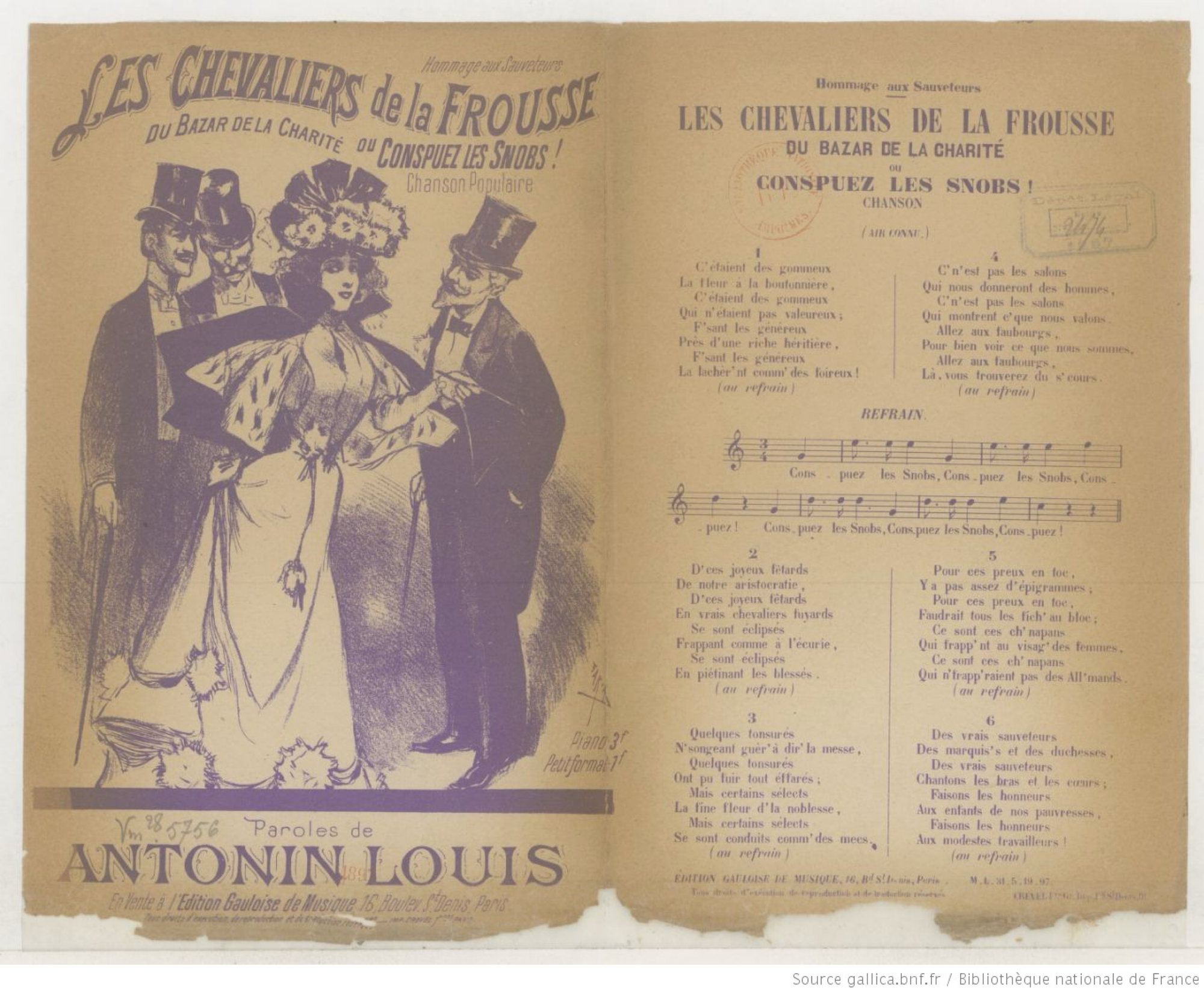
Behind the controversy lay extremely potent questions then – that still feel very relevant now – of masculinity, femininity and class. "Women and children first" was the moral duty of the powerful, the obligation that made hierarchy palatable. What was the use of an aristocratic man in the rising 20th century if he did not embody the chivalric ideals of his knightly ancestors? The tragedy exposed the seams of an archaic world coming undone.
Listen to the audio in your browser or wherever you get your podcasts. (Note: The audio does not include sidebars, images or captions, which contain lots more information, so I do recommend checking out the original piece.)
 Isabelle Roughol
Ends and odds
- Well, this is rank behaviour. A company has copied the names and designs of 75 history podcasts to confuse listeners looking for them, divert audiences and make money off ads. The content itself is just AI drivel. Do I wish Broad History were famous enough to be ripped off? Yeah, let's be real. But honestly, some people really don't mind what they do if it makes them a buck. Don't get played.


- If it's a historically-set film, odds are I've seen it. If you're looking for a new one, I can recommend Colours of Time, by Cédric Klapisch. Not quite a masterpiece but it's a fresh and pleasant take on the period film. I loved it for transporting me rather faithfully to one of my favourite eras, 1890s Paris. Not the Paris of the Bazar fire though, but a Paris of bohemian artists and working-class women this time.