It's 10:30 pm. I just spent my entire Sunday researching and writing this article. Alice Guy's history is complex and contested. Sources disagree. I wanted to give you a fair and nuanced picture. This work doesn't come easy but I think it's important. If you value it too, please support it by becoming a member of Broad History (you'll get podcast episodes early, including one in a couple days) or making a one-time donation. Every little bit helps me grow Broad History. Thank you!
Update: Made a video version of this story. There's a lot more in the text below but to get you started...
How many movie stars at the Academy Awards tonight will remember the woman to whom they owe much of their industry?
Alice Guy (pronounced Ghee) was 22 years old when she discovered the moving pictures. It was 1895 and the Lumière brothers had invited Léon Gaumont, a camera manufacturer, to a demonstration of their new technology. Alice, his secretary, was allowed to tag along. She was fascinated and quickly understood the potential of the new medium.
Films then were mostly non-fiction stock shots – a train entering the station, workers leaving a factory, waves crashing on a beach... Alice was the daughter of a Chilean immigrant with a large bookselling and publishing business. She knew storytelling and she knew she could do better. She pitched Gaumont the idea of making their own films but making them stories – surely, that would help sell more cameras and projectors. Fine, the boss said, but on your own time. Her first production, The Cabbage Fairy, was arguably the first narrative fiction film and a big success. (Arguably because some film historians point to the Lumière brothers' scene The Sprinkler Sprinkled instead, filmed some months earlier, or some of the early George Méliès pictures. It's a fair debate but where you land ultimately matters little. History likes to remember singular firsts, but progress more often arises from multiple people independently arriving at the same result at roughly the same time.)
The Cabbage Fairy in its 1900 reshoot version. Popular early films were often shot multiple times because negatives were damaged by repeated printings. Old negatives were destroyed to recycle materials. The film alludes to a French folk story you tell kids so you don't have to explain sexuality – boys are born in cabbages, girls in roses.
With The Life of Christ (1906), an epic film more than 30-minute long with hundreds of extras and outdoor locations, Alice Guy invented the "sword-and-sandal" genre.
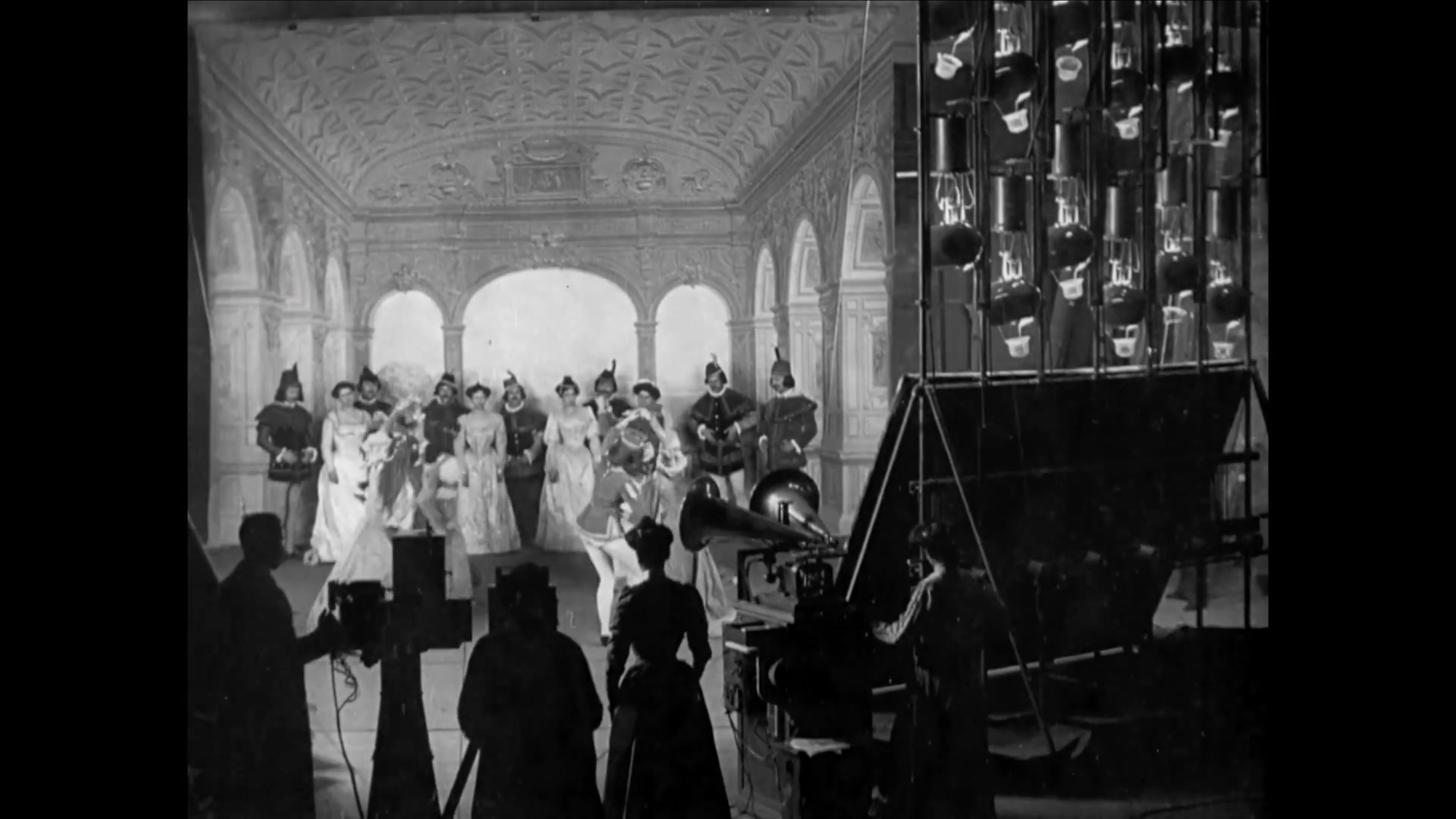
Alice became a one-woman film studio. She was the director, the screenwriter, the producer, the director of photography... Eventually, Gaumont relieved Alice of her secretarial duties and named her the first executive of what was, then, the biggest film company in the world (or second-biggest, battling it out with Pathé) and is, today, the oldest continuously-running studio. She made more than 400 films in 11 years. She experimented with visual effects. She filmed herself behind the scenes and came up with the "making-of" film that has bulked up so many DVD releases. In 1906, she invented the "sword-and-sandal" genre with The Life of Christ, an epic running more than 30-minute-long with hundreds of extras. She filmed with the Chronophone, a Gaumont innovation that synchronised sound to film.
She was in her mid-30s already and a powerful professional when in 1907, she met another, much younger Gaumont employee, Herbert Blaché, who traveled with her to Germany to sell the Chronophone. They were married within months. Gaumont had already planned to send Herbert to America to sell the Chronophone there. Alice followed her new husband, but there was no job for her. Gaumont seems to have been sorry to see her leave but Alice had also made enemies on the Paris film scene. She had fired an assistant director when she learned he had raped a teenage extra on her set. Few understood her decision. There were many men in the wings coveting her job. She later wrote in her memoirs:
“I soon learned this self-evident fact: As long as a woman remains in what they call 'her place', she is left alone. But as soon as she takes up a position usually reserved to men, she is looked at sideways.”
In America, the now Alice Blaché was bored with the life of a suburban mom. In 1910, between the births of her two children, she launched her own film company, Solax, taking advantage of Gaumont's underused studio in Flushing, New York. It was quickly so successful that she could buy her family a big house and build her own $100,000 studio in Fort Lee, New Jersey. She was a workhorse. She oversaw all production and directed half the films that came out of Solax, as many as two a week. Alice's bold success and her French elegance made her a favourite of the US press, while she was soon forgotten back home. She was, according to the Motion Picture News in 1911, a “fine example of what a woman can do if given a square chance in life.”
Her films were progressive, ground-breaking and commercially successful. Her motto – "Be natural" – was plastered all over her studio; she invented a new, realistic language for film actors, away from the theatricality and heavy makeup of the stage. Her films centred the psychology of characters and often featured modern women who defied social conventions. They wore trousers and short hair, rode horses and pointed guns at villains. She imagined a world, In the Year 2000, where all gender roles were reversed (the film was a Solax remake of The Results of Feminism, which she had made for Gaumont in 1906). She filmed the first movie with an all-Black cast and the first on-screen kiss between two men. She wrote a film about family planning, sadly never realised, for the 1916 opening of Margaret Sanger's planned parenthood clinic.
In a complex satire, The Results of Feminism, Alice Guy imagines a world where gender roles are reversed and denounces – in 1906 – the daily injustices and assaults women are subjected to.
In 1913, fateful mistake perhaps, she handed the presidency of Solax to her husband so she could focus on her artistic role. Historians here diverge. A lot of the sources explain Solax's decline and ultimate failure as the consequence of distribution difficulties as an independent studio, increased costs as the public demanded longer features, and the concentration and relocation of the film industry to the West Coast. All that is true but more recent scholarship by documentary film-makers Nathalie Masduraud and Valerie Urrua (2021) suggests Alice was more intentionally managed out by her own husband.
Within months of being named to the presidency, Herbert had formed a company in his own name, but using Solax inventory, actors and locations to produce his films. Alice was excluded from board meetings. Solax was slowly subsumed, Alice dispossessed. Herbert's company eventually failed too. The marriage fell apart and by 1918, Herbert had moved to Hollywood to live with one of his many mistresses. Alice briefly attempted to continue to work with him, but divorced and finally bankrupted when her Fort Lee studio burnt down, Alice returned to France with her two children in 1922 to seek refuge at her sister's.
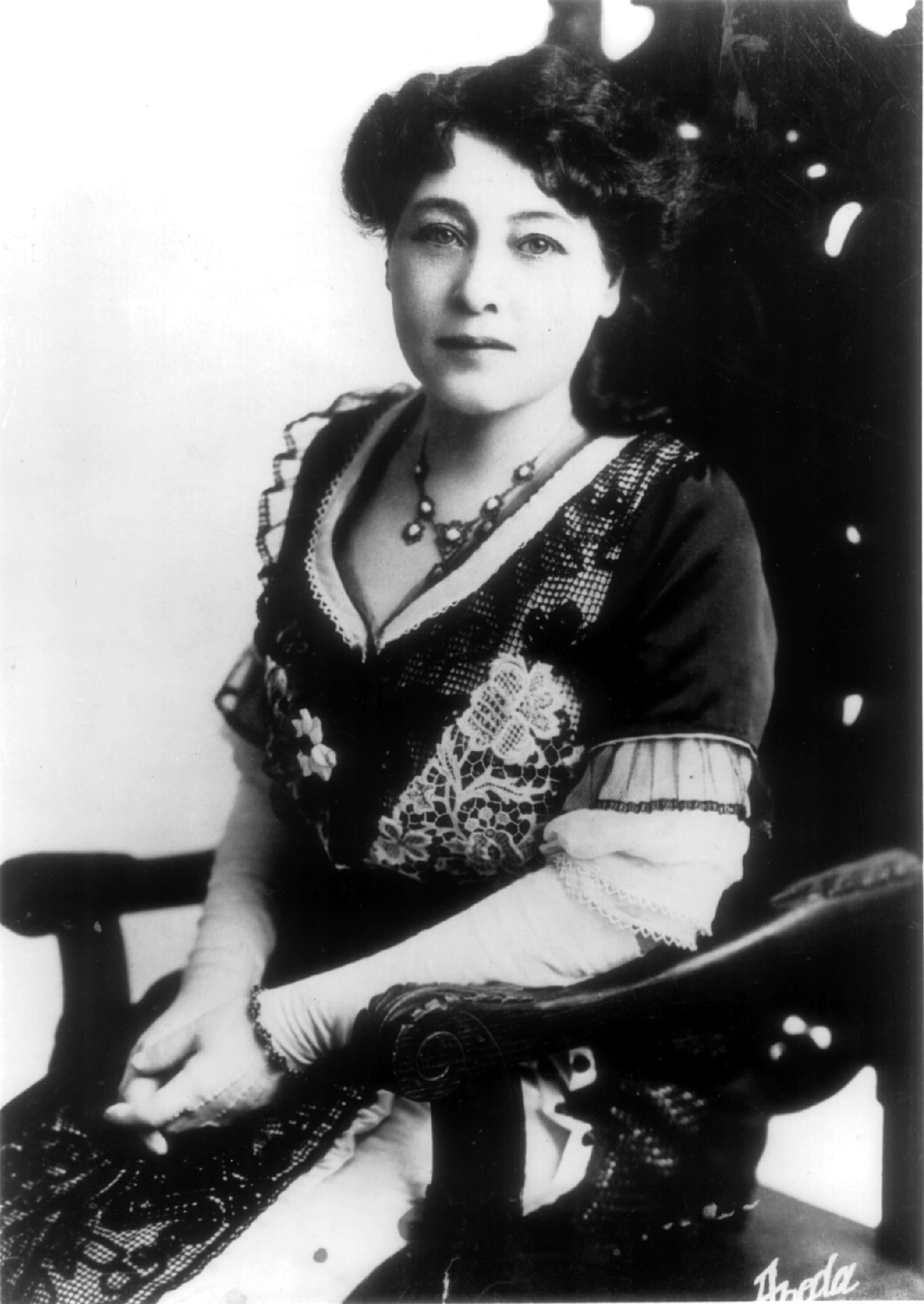
An even worse betrayal awaited her at home. When she called Léon Gaumont desperate for a job, he refused to help. Was he bitter about the way she had left? Jealous of her American success? She had launched and run two of the world's largest studios. She had made more than 600 movies. She was, for a few years, the highest paid producer in America. But the days of pioneers were over; cinema had become big business. A man's business. She never again worked in film. Worse: When her old boss sent her a copy of the corporate history he had just published, she found she had been erased.
“My name was nowhere. When I protested, he said ‘I'm not the one who compiles the catalogues, Alice. And it matters so little.’ Let me tell you, my career as a woman has often left a bitter taste.”
Early films had no opening or end credits, just a card with the name of the studio. The names of the individuals involved were kept in company archives. Alice realised her male assistants had taken credit for all her films. She spent the last three decades of her life trying to restore her name in film history and find copies of her work. She wrote her memoirs, and though she was awarded the Légion d'honneur, France's highest civilian honour, with the support of Léon's son Louis Gaumont, doors remained largely closed to her. Male historians and journalists had little interest in hearing her. She died in 1968, aged 94, having found just two of her films and a fragment of a third. Her memoirs only found a publisher eight years after her death.
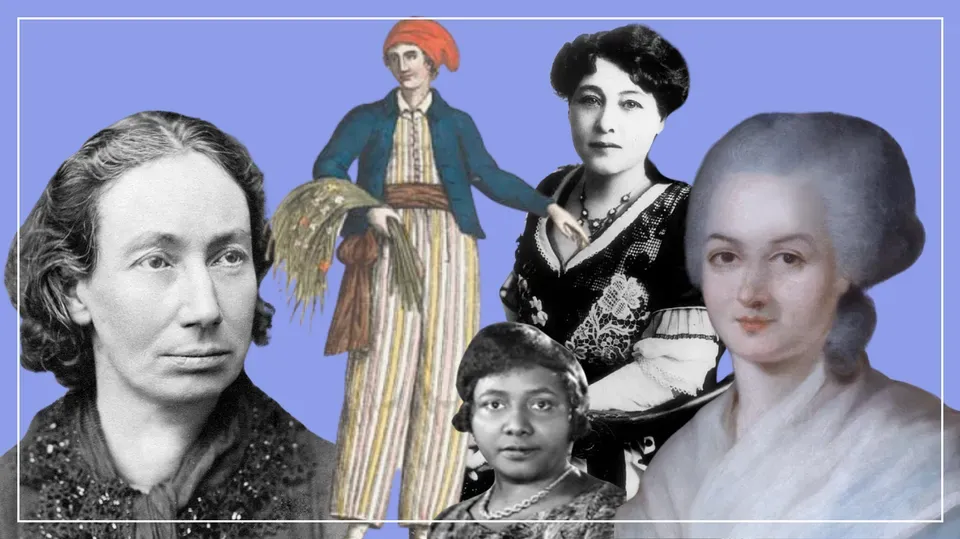
Recognition came too late but it came, through the documentary filmmakers Masduraud and Urrua, their US counterpart Pamela B. Green (see her film below) and Alice's biographer Alison McMahan. As often in women's history, it took female scholars getting interested in their own history for Alice to resurface. In 2024, Alice Guy was one of 10 historical French women honoured at the Olympic Games opening ceremony; that's when most of her country learned her name. HBO Max and French public television have commissioned a six-episode mini series on her life. Perhaps by the next Oscars ceremony, many more will know her.
Interested in early cinema history?
Read about the devastating 1897 that nearly destroyed the nascent industry and killed several of Léon Gaumont and Alice Guy's colleagues and clients.
 Isabelle Roughol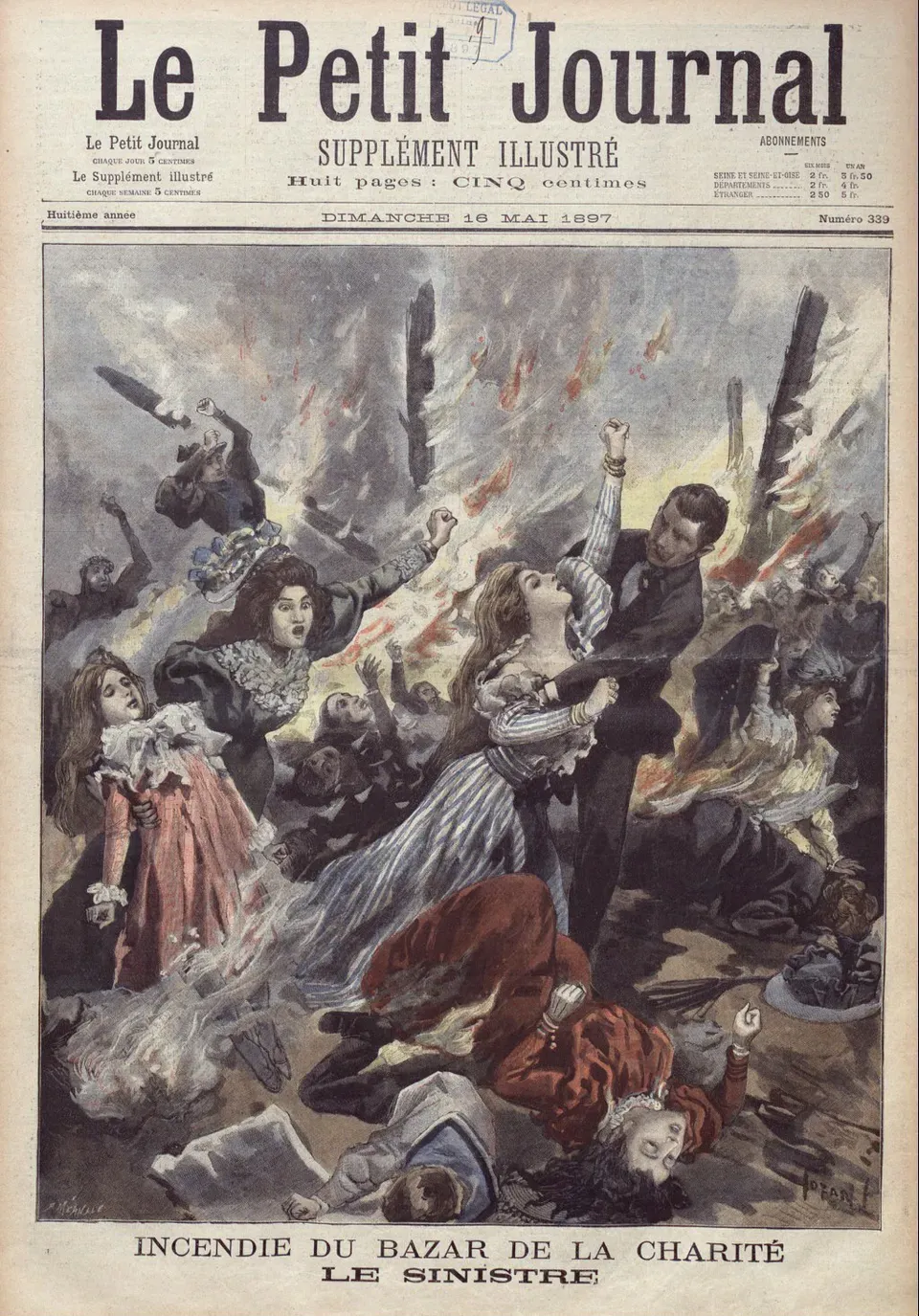
Read about the nine other French women – besides Alice – celebrated at the 2024 Paris Olympics
 Isabelle Roughol