If you don't hang on Instagram and are wondering what the heck is happening to Broad History, scroll down for explanations. But let's get to the history first! Note this newsletter is much more comfortably read in your browser. Lots to get through today...
What was the most radical thing about the American Revolution? Not the undoing of the colonial yoke. Not the solemn declaration that all men are created equal. No, it was the sudden politicisation of women, says historian Carol Berkin.
Of course she's got her darlings. Carol Berkin is one of the preeminent historians of women in the American Revolution. Her book "Revolutionary Mothers", published in 2005, was a ground-breaking, movement-building effort in recasting America's independence story. I couldn't think of anyone better to open this new Broad History series on the women of the American Revolution. All summer, we'll be talking with renowned historians of the early American republic, meeting with women such as Abigail Adams, Phillis Wheatley Peters, Mercy Otis Warren or the Schuyler sisters, and complicating the very virile story coming out of Washington D.C. (You may notice listening to the episode that "virile" is a particularly difficult word for me to pronounce in English. I recorded several takes and then I gave up.)
Revolutionary women were not just helpmates to the Founding Fathers, Carol Berkin argues. They were participants with their own agency, their own motives, their own political beliefs. Women were not at the Declaration of Independence or at the Constitutional Convention, of course; they were actively barred from high politics. But they were everywhere else that mattered.
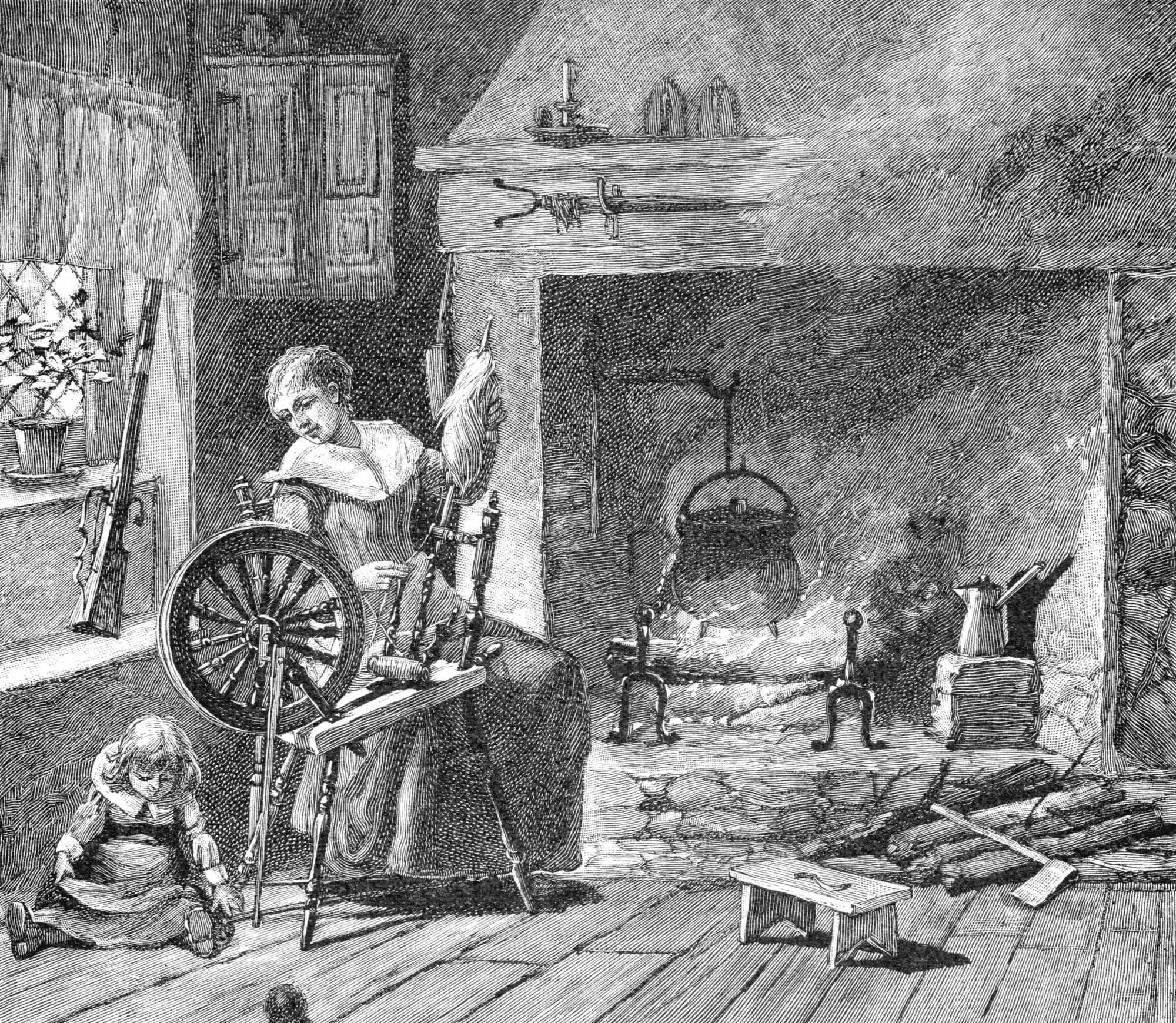
Their radicalisation started with the boycott of British goods. Men wrote against British taxes on their consumption, but it was women who made purchases for the household. They understood and enforced what became a staple of American protest – using the power of the wallet to make a point. They refused to buy British tea, a drink as ubiquitous as your Starbucks today, even thought it was a central part of their social life. They returned to wearing homespun rather than buy British cloth, even though making the stuff cost them dearly. Young women even vowed not to marry men who would buy a marriage licence stamped and taxed by the British government. And they pressured their neighbours to comply.
Later in the war, women organised to raise funds and make shirts for soldiers who were woefully ill-equiped. They were washer women, who saved Washington's army from being decimated by lice and disease. They were Molly Pitchers, who cooled canons with water between firings and picked up the linstock when men fell. They were spies and messengers, who used the enemy's underestimating them to travel through British lines. Revolutionary women's political activism was largely not the stuff of stump speeches and noble declarations; those avenues were closed to them. It was concrete, direct action that made a difference.
Enough chatting, have a listen.
PS: I want to acknowledge that some of the stories Carol tells, such as those of Sybil Ludington, Molly Pitcher or Lydia Darragh, have multiple versions out there and you may have heard them differently. That gets to the heart of why women's history can be so difficult to research. We'll get into that on next week's newsletter.
Read Revolutionary Mothers
Carol Berkin's book is super accessible, full of fun stories and eye-opening. Strong recommend. You can get it from the US Broad History bookstore and support her and the show that way.
Unfortunately, most of the books I'll be discussing in this series are not available in the UK bookshop. Brits and others, try your local libraries, ask your favourite indie bookshop to order it in or, yikes, try Amazon. I still did my best to curate a list of books on women in the American Revolution that are available in the UK.
Can't get enough of Carol Berkin?
She'll be back for a second episode closing out the series later this summer. We talked about the long impact of the revolution for American women; the fates of Black and indigenous women at independence; and the concepts of republican motherhood and separate spheres and the way the new far right is seizing upon those ideas today. I like that episode even more than this one and I can't wait to share it with you.
But you don't actually have to wait. I published that episode early exclusively for supporting members on their podcast feed. To have a listen, go ahead and sign up to support the show at broadhistory.com/membership. You'll get my eternal gratitude and a link to listen immediately.
What's so bad about spinning?
Carol's and my comments about the utter dullness of spinning linen yarn seems to have displeased the spinning community. No offense was intended, I'm sure some people enjoy it. But seriously... there is a significant difference between spinning as it exists today – a heritage craft people undertake as a means of learning about history and reconsidering their relationship to hyperconsumerism – and spinning as it existed for women in colonial America and elsewhere for centuries.
Women had to spin every single thread they and their family wore, unless they were rich enough to pay someone else to or senior enough to hand it down to other family members, mostly children and unmarried women (hence "spinsters"). Why do girls get pricked by spindles in fairy tales? Because that was the ubiquitous accessory of girlhood, even in the upper classes. It was the thing you still occupied your hands with if you could finally sit down at the end of the day. It was the thing that broke your back, tired your eyes and blistered your fingers. It's why clothes were for centuries the most expensive things people owned. It's why they were designed to evolve with the body and be kept for a lifetime, even for multiple generations.
There's plenty in the historical record about how tired women were of spinning, and the invention of mechanical spinning and manufactured cloth was as revolutionary to them as later the washing machine. To understand the effort involved, I recommend the sublime work of public history by Eve Ogden Schaub on Instagram, who is GROWING a dress from scratch. That's right, every step from planting flax seeds to retting, spinning, weaving and sewing. She's 63 weeks in and she's got a few skeins of yarn, not nearly enough for a single dress. From this to Temu...
What is coverture?
Coverture is a fundamental reality of the lives of early American women. It comes up in every episode of this series so it's worth an explanation.
It's a legal doctrine the colonies inherited from British common law, under which a married couple formed "one person in law" – and that person was really the husband. On her wedding day, a woman went from feme sole (a legal status equivalent to a man's) to feme covert or covered. She suddenly had no independent legal existence. Any property she brought into the marriage or any she acquired thereafter became her husband's property. Her earnings were not her own. She could not bring suits, enter contracts or write a legally binding will. She had no right to the custody of her children. Rape was usually not a crime against her, but against her husband's rights, so marital rape could not exist. It's the laws of coverture that brought John Stuart Mill to write in 1869, "There remain no legal slaves, except the mistress of every house."
In exchange, a husband was expected to protect and provide for his wife. Coverture had minor benefits: married women could not be sued in their own name or charged with minor infractions, though they retained liability for serious crimes. A widow also had dower rights. Property did not revert to her, but she had use of and a lifetime income from typically a third of her late husband's estate. Grief notwithstanding, widowhood was the most enviable state for a woman – the respectability of having been married and the autonomy of a feme sole. There were few incentives to get remarried as long as you could provide for yourself and any remaining children.
Because of coverture, American and British women had far fewer freedoms than indigenous or Spanish women in North America. Coverture was only undone in the United States in the late 19th century. Of course, lived realities differed. Partners navigated this legal landscape together, and many women asserted more autonomy than the law strictly allowed. We'll see this notably in the lives of Abigail and John Adams. Not every husband was a tyrant – but they all had the legal right to be.
What on Earth is going on with Broad History?
Tl;dr: We went a little bit viral.
Last week, I was researching semiquincentennial celebrations in D.C. for an article I hoped to pitch to a newspaper here in London (I failed, this will not be written) when I came across the Freedom250 website put together by the White House. (America250 is the official, bipartisan and Congress-approved non-profit organisation celebrating the semiquincentennial. Freedom250 is an alternative public-private partnership set up by the Trump administration and its website is the furthest thing from serious scholarship I've ever seen put together on public funds.) The website uses ridiculous AI portraits of revolutionary figures. I'd been meaning to tell you all about my AI policy (did you know I wrote a whole AI pledge on the website?) and I thought that would make a perfect case study. So I made this video. Let's just say the American resistance showed up... en masse.
Consequences for this little community: not so little anymore.
- There were a bit over 1,000 of you reading this newsletter; we're about to break 3,000.
- My Instagram following 10xed! I'll never make a Big Tech platform my primary channel, and I encourage you to comment here, in this forum we own, but the conversation and vibes there are lovely too. Do give it a follow.
- More than 12,000 downloads on the podcast in a single week. If you know podcasting, you'll know getting to here on a handful of episodes, without a network, without paid ads, as just one part-time solo creator... That's pretty cool. Broad History is about to beat in one week what my old show Borderline achieved in 50 episodes and many years. It opens the door, not yet but eventually, to finding distribution partners and sponsors.
- Brits, you're outnumbered. The audience used to be about one-third British, one-quarter American and then everywhere else. It's now 80% US 😅 This was always a British + French + American history programme (I don't feel resourced or legitimate to take on countries I'm unfamiliar with at the moment) and that won't change. The next season – I've decided but I'm not telling you yet – will straddle the Atlantic.
- Still, a shout out to new Portuguese readers too, who were referred here by a columnist Henrique Raposo. Obrigada!
So a massive thank you and welcome to all new readers, listeners and followers. Let's go!