Paul Greengrass's The Uprising starts on a scene that has become a cliché of the cinematic portrayal of historical working-class women – a mass sexual assault. It's 1381 and a royal official has come to an Essex village to collect the poll tax, a flat rate of 12 pence per person over the age of 15. Twelve pence is about three days' wages for a simple labourer back then. It's the third ad hoc tax raised in five years, to cover the crown's considerable debt from the Hundred Years' War, and it's enforced unevenly, sparing the powerful. The people are pissed. When a man starts arguing his daughter is not yet 15 and shouldn't be taxed, soldiers grab every young women around and feel under their skirts to "check their age". Absent a birth certificate, pubic hair would do. The incident is apparently inspired by the legend of John Tyler, who is said to have killed a soldier who had lifted his daughter's dress to check for signs of puberty. (This is probably an invention by later writers.) Here the job is given to Ploughman, a nameless farmer played by Andrew Garfield, who embodies the everyman.
Ploughman is flanked by Alyce, the everywoman. Alyce is a fictional former nun and a devotee of the radical heretic priest John Ball. She is Ploughman's moral compass, the gentle and idealistic voice of the rebels' best aspirations, a storytelling foil to the more volatile male leaders Ball and Wat Tyler – whom she nonetheless follows unquestioningly – and to Ploughman's depressed nihilism. While she initially cheers on the execution of the rebels' enemies, she is horrified by the out-of-control mob looting London. She never shows initiative and is ultimately rescued by Ploughman at the final battle in a textbook case of the "what do we do now?" trope. What motivated Alyce's rebellion? She'd been raped, of course.
Women's politicisation is only ever portrayed as a response to sexual violence, not as the product of a thinking mind
Opposite Alyce is the only other female character, the dowager queen Joan of Kent, mother to Richard II. Joan spends the whole film feebly attempting to influence her son with withering stares and the occasional tsk tsk. She is horrified by the king's betrayal and massacre of the rebels – an event that was invented out of whole cloth for the film. What Alyce is to the peasants, Joan is to the crown: an ultimately powerless and defeated moral centre.
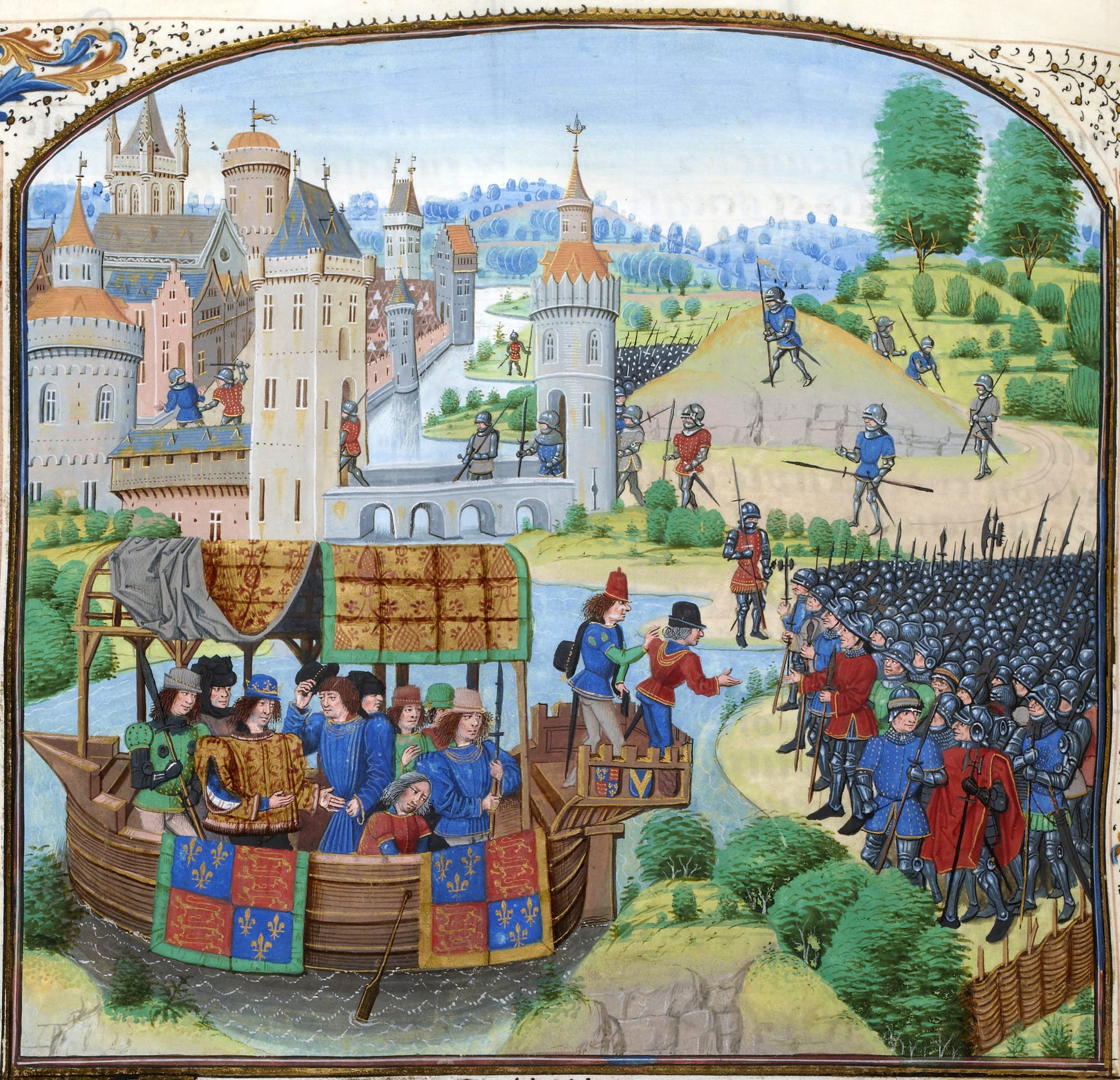
I easily forgive historical films' inaccuracies, but it's tiresome to again and again find in them female characters who serve a single purpose – holding up a mirror to the male heroes. (In fairness to Greengrass, his male heroes are also barely developed.) Tiresome too is the total absence of agency or the fact that women's politicisation can only be envisaged as a response to sexual violence, not as the product of a thinking mind. Had the filmmakers only been curious enough, they'd have found the Peasants' Revolt offers far more interesting, complex and real female characters.
How women actually showed up in the Peasants' Revolt
It's not the history English school children typically hear, but in Kent the rebellion started with two women – Joan Hampcok and Agnes Jekyn – who protested the poll tax in the spring of 1381 and were the uprising's first imprisoned leaders. Wat Tyler staged an attack on Canterbury castle to free Joan and Agnes, held there in shackles, and together, Hampcok, Jekyn and Tyler led the march on London. Women reviled the 1381 poll tax in particular – previous impositions had had an allowance for married women so households only paid once. This one did not. It was a wife tax and it was enraging because married women were like children under law. As feme covert a married woman could not hold property or sign contracts in her own name. She was less than a single woman, and certainly less than a man. It ought to have at least one benefit – not being taxed.
Portraying such violence in women is uncomfortable. It's also accurate.
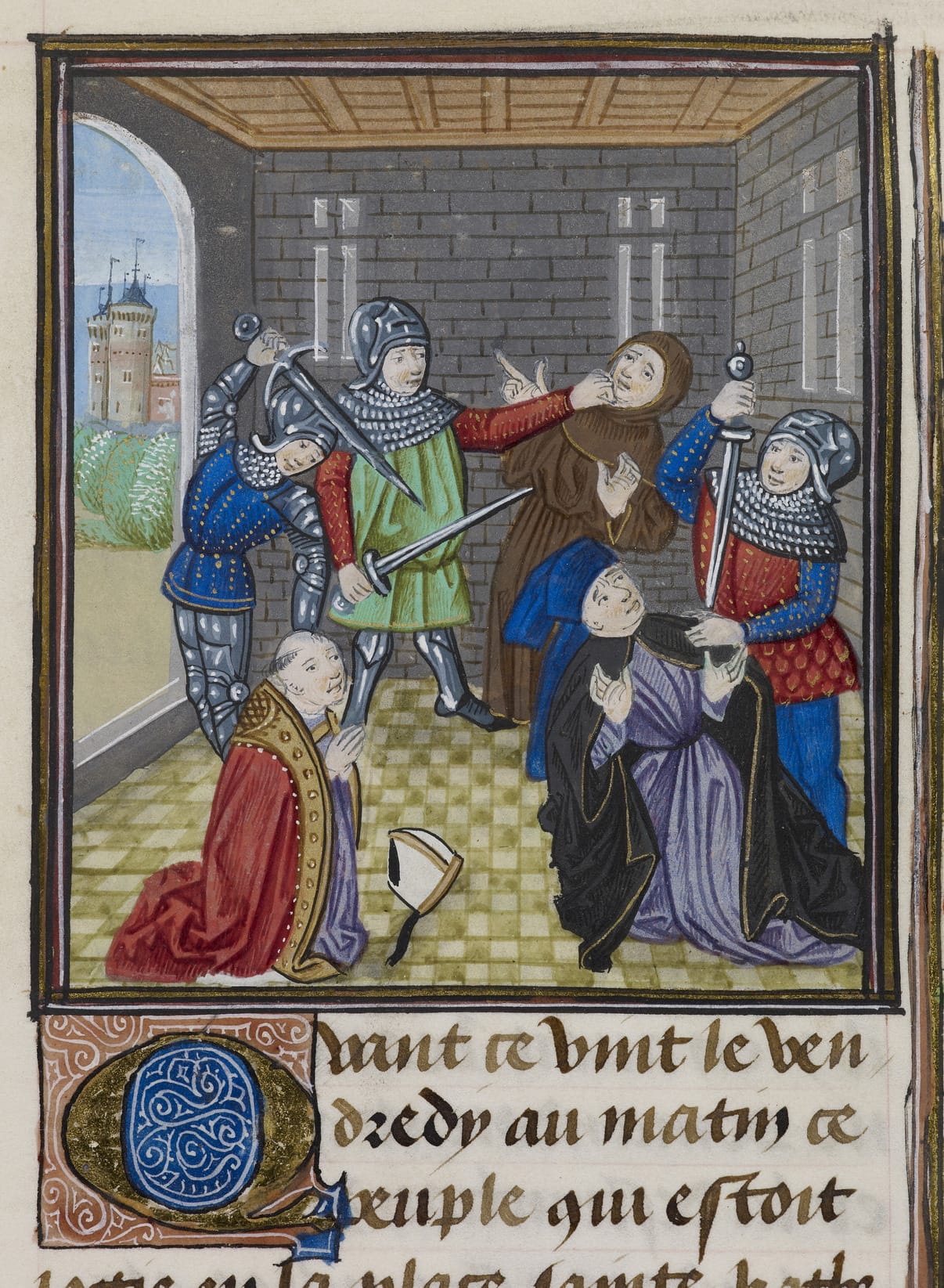
When they got to the capital, it was another Kent woman, Joanna Ferrour, who led rioters to burn down the Savoy Palace, the grandest house in London and the home of John of Gaunt. Ferrour was a "middling sort" woman, whose family held property in Kent and perhaps the wife of a former MP representing Rochester. She reminds us that "Peasants' Revolt" is a misnomer; all but the aristocracy took part. Court documents called her the "chief wrongdoer and leader" of the mob. She was the one that pulled Archbishop of Canterbury Simon Sudbury and Robert Hales out of the Tower of London and had them beheaded – a job given to Wat Tyler in the film, even though he was actually busy negotiating with the king then. Ferrour made out with gold worth over £1,000, which she shared with other rebels.
There are other women all over court documents: the mother-and-daughter team Matilda and Isabella Brembole, who led the looting of the uber wealthy Priory of Clerkenwell; Katherine Gamen, who prevented the rescue of Chief Justice Cavendish, leading to his beheading by the crowd; Margery Starre, the old woman who roused the attackers of Corpus Christi college in Cambridge and forced the clerics of the colleges to submit to the civic authorities of the town. Acts of rebellion took place up and down the country, and everywhere women are cited – not as a majority, but as a non-negligible quantity – in acts of looting and rioting, motivated by both personal gain and political activism. Portraying such violence in women is uncomfortable. It's also accurate.
It doesn't take 2026 audiences much labour of imagination to understand the people's anger at unaccountable political elites, rising costs of living and endless wars. Paul Greengrass is transparently telling a story about where contemporary popular rage might lead us. Unfortunately he seems to think women are peripheral to that rage. In history, they never were.
Where to learn more
- Most women's names cited here are from Philippa Gregory's masterful Normal Women (here it is in the US bookstore and the UK boostore)
- The People of 1381 database is a herculean project by historians to collect primary sources on all people and incidents of the uprising
- The same team wrote a quick breakdown for The Conversation of what's historically accurate and what isn't in The Uprising
- This review of the film does a better job than I did at expressing my feelings about it
What 1381 has to do with the witch hunts
I know what you're going to say: "Isabelle, you promised us a series about the witch hunts and we're still waiting. What are you doing looking at events from two centuries earlier?" Fair. The truth is I watched the film over the weekend and I fell down a rabbit hole. There is a connection though.
I talked to fantastic medieval historian, author and podcaster Eleanor Janega last week for the series and we went way back to the 14th century to understand the world out of which the witch hunts rose. They surged from the mid-1500s, but the first known witchcraft prosecution in the British Isles was of Alice Kyteler in Ireland in 1324!
One of my favourite nerdy things to do in history is figure out how events connect across borders and generations. The Western Schism of the Catholic church, which Eleanor talks about in this excerpt from our chat, starts just three years before the Peasants Revolt. It saps the authority of the Roman Catholic Church, which makes it a whole lot easier to behead the archbishop of Canterbury and other clerics, but also leads eventually to Reformation. And it's in the religious battles that ensued that witch panics were born...
I'll be releasing the entire conversation for members shortly so if you too are a fan of Eleanor's, you know what you gotta do.