Could you do me a favor? I think it would be insanely cool if the tiny podcast I produce alone in my bedroom won Listeners' Choice at the British Podcast Awards. All it requires is you voting en masse and I know what you can do, I've seen you on Instagram... So please click below, type in Broad History and don't forget to confirm your vote from your email inbox. No you don't need to actually be British. Vote right now, it's only open a few days. THANKS A BUNCH! 🥰
Abigail Adams made a killing in war bonds (and possibly a bit of insider trading). She used John Adams' diplomatic posting to import luxury goods from France and resell them at an insane markup. She speculated on land in Vermont just as it was petitioning for statehood. Her astute investments are the reason her civil servant husband, unlike many of the founding fathers, did not die in massive debt.
But as a married woman, she could not own anything in her own name or keep the proceeds of her business ventures. The laws of coverture prevented it. The land in Vermont? Bought in the name of her husband, her sons, even her single daughter. The war bonds? Technically John's. The farm? John's. The earnings from her import business? All reverted to John.
Abigail was lucky. Her loving partner, though not always devoid of a little misogyny (eh, it's the 18th century after all), recognised her business skills. While John Adams was less inclined to risk-taking, he largely let her be. To her, the management of the household finances; to him, the destinies of the country. When at her death, John found a will she had written to bequeath all "this money which I call mine" to female relatives and servants, leaving none to any man – a document with no legal standing – he and their sons chose to execute her wishes without delay or complaint.
Abigail Adams' famous injunction to her husband to "remember the ladies" in the new country's laws was not, her biographer Woody Holton argues, a call for women's right to vote. That was far too radical for Abigail, a woman of great intellect with liberal ideas about women's education and autonomy, but who did not fight the idea of separate spheres for men and women. Hardly anyone did in 1776. Rather, "remember the ladies" was a recognition of how different her fate could have been had she not won the lottery of marriage. It was a plea to free women from the tyranny of bad husbands. (In this interpretation, Holton is echoing the tremendous work of historian Elaine Crane.)
Abigail must have known a few tyrannical husbands. A devastating streak of alcoholism ran through her family, killing two of her three sons, two grandsons and destroying the life of her brother. To imagine this woman persuading and cajoling her husband to preserve women in the law from spousal violence, financial dependency and coercive control makes her incredibly modern and relatable to me. But John, the good man who just could not see what a woman saw, laughed it off.
What do you think Abigail meant?
Make up your own mind and let me know what you think in the comments. Here's the full text of this passage written on March 31st, 1776, far too often cut short and out of context. All of John and Abigail's correspondence is available online. (Note: Abigail was a bad speller. Many of the women we'll study were. Two reasons: Women received little formal schooling and lots of spelling wasn't actually fixed in the 18th century. People wrote their own names differently depending on the mood of the day. This is no way reflects a lacking intellect.)
I long to hear that you have declared an independancy—and by the way in the new Code of Laws which I suppose it will be necessary for you to make I desire you would Remember the Ladies, and be more generous and favourable to them than your ancestors. Do not put such unlimited power into the hands of the Husbands. Remember all Men would be tyrants if they could. If perticuliar care and attention is not paid to the Laidies we are determined to foment a Rebelion, and will not hold ourselves bound by any Laws in which we have no voice, or Representation.
That your Sex are Naturally Tyrannical is a Truth so thoroughly established as to admit of no dispute, but such of you as wish to be happy willingly give up the harsh title of Master for the more tender and endearing one of Friend. Why then, not put it out of the power of the vicious and the Lawless to use us with cruelty and indignity with impunity. Men of Sense in all Ages abhor those customs which treat us only as the vassals of your Sex. Regard us then as Beings placed by providence under your protection and in immitation of the Supreem Being make use of that power only for our happiness.
Meet the presidential doodler
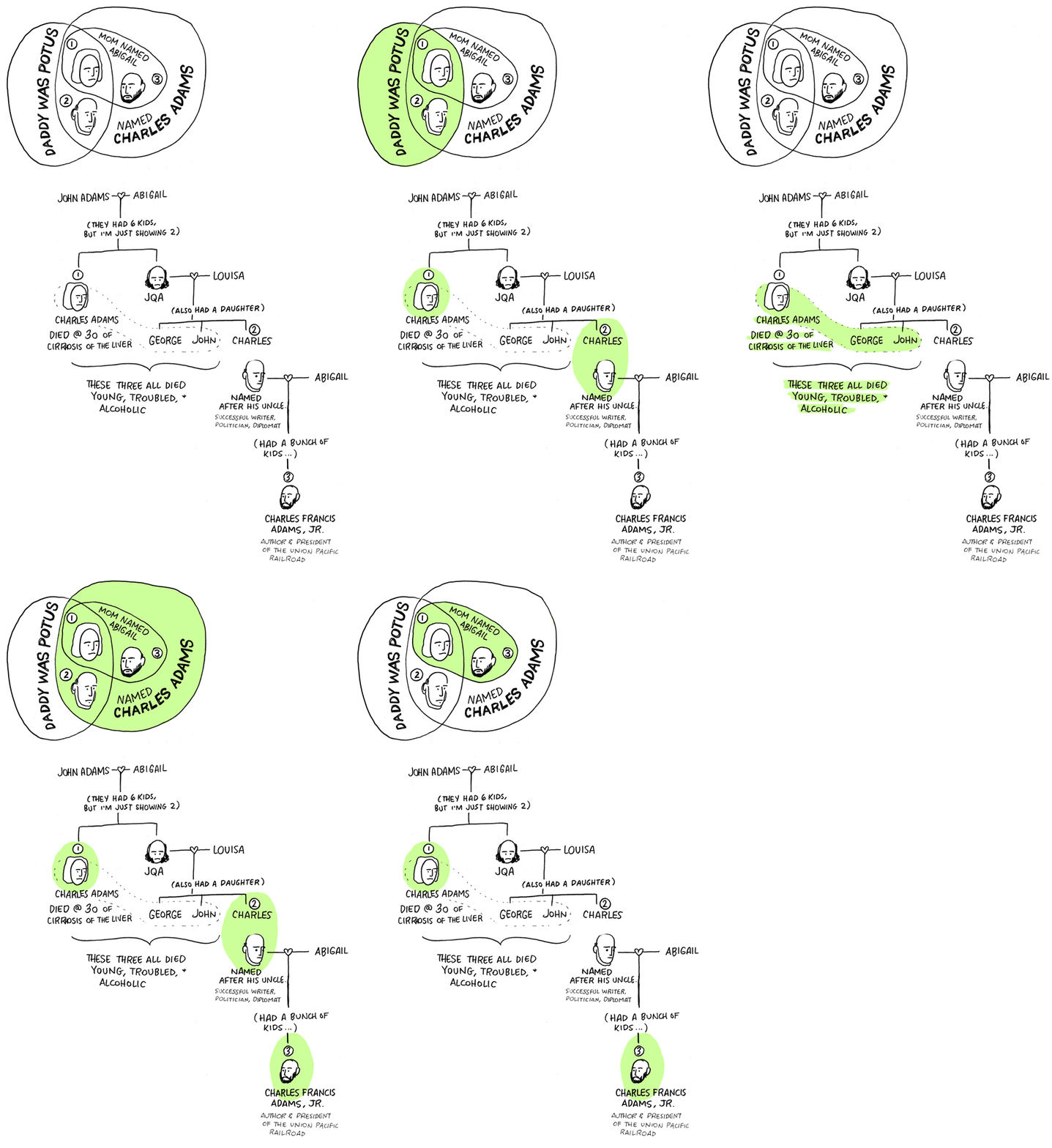
Heather Rogers is a freelance graphic designer, illustrator and content creator, and a Broad History listener. She is the brains and the pen behind Project Potus Pages, which explores American presidential history in hilarious and informative doodles. I am hooked! I only wish Broad History looked that cool visually. (One day...) She kindly agreed to illustrate this week's newsletter. Check out her work, follow her instagram and sign up for her own newsletter at potuspages.com.
Heather introduced herself by responding to the welcome email when she signed up for Broad History. I really do mean it, I love hearing what you're up to. Have a creative project to show off? Let me know! I heard from so many educators too. Keeps me on my toes. Haven't introduced yourself yet? Just hit reply on this email.