With this episode, our 15th, Broad History has reached 50,000 downloads. I am amazed. This has been an incredibly rewarding (and quite exhausting) few weeks since I found you all – or you found me. I'm done working on the American Revolution series, which is already available in full to supporting members like Theresa, Katy, Zuzanna and Karrie. Welcome! Thank you as well to donors Hope and Whitney. If you'd like to join them and listen now, early and ad-free, click below. I'm already thinking about the autumn series and members will get that early too...
There's something that's bothered me about the politics of Revolutionary-era American women – why so timid? Carol Berkin told us that the most radical thing about the Revolution was the sudden politicization of women. But what they got political about was their new nation. They demanded independence for the country; of their own emancipation they seemed to have little to say.
That's a pitfall in women's history: we always want women of the past to be more forceful in their demands than is realistic to expect of people with centuries-old world views. We wish they saw things the way we now do, but we needed them to get here. They cannot be ancestors to themselves.
Yet knowing all this, I'm still frustrated. That's because I know the French revolution a bit, and those women were not nearly as polite. I'll admit there's a difference of 15+ years. That's easy to elude when you look back centuries, but it's about the same gap as between the years when we all turned on Monica Lewinsky and the years when we were saying #MeToo.
There's also probably something in American puritanism that led Abigail Adams to only ask in private that her husband and his coconspirators "remember the ladies" or Mercy Otis Warren, who we meet in this week's episode, to take a key role in shaping Anti-Federalist political thought while never asking for the franchise for herself. She feared she may "transgress the boundaries of (her) sex." French women, meanwhile, were rioting and arresting the king. They obtained an independent legal status from their husbands, the right to divorce, the right to inherit, the right to vote for local assemblies... and they lost it all in a few short years. The French revolution was simply more radical – and the backlash more violent.
That radicalism did influence American women. My guest this week, Warren biographer Rosemarie Zagarri, told me of an ebullient, transatlantic conversation about women's rights in the 1790s when intellectual women in France, Britain and the new United States exchanged around the same ideas – how could women obtain autonomy in private life and power in public life? In America, that conversation eventually settled around the concept of republican motherhood – which we'll explore at length next week. It conceded women some influence on the civic destiny of the nation, but strictly in their own domestic sphere, and shut them out of government entirely. Any ambitions to give them political rights were quickly dismissed or even reverted – listen to learn about the stunning and little-known episode during which 18th-century women voted in one single state for three decades (!) before a reactionary backlash disenfranchised them.
"We go through periods throughout history where we have immense change, and somehow then society can't incorporate all those changes, and there's a reactionary moment."
- Rosemarie Zagarri
The protofeminist women who led that conversation came to be known as "female politicians" – a sometimes laudatory, sometimes pejorative term for women who did not stand for elections or hold office of course, but who participated actively in political discourse. One was Mercy Otis Warren. My conversation with Rosemarie Zagarri will tell you all about her. Here I want to share some context on the other female politicians mentioned in passing in the episode.
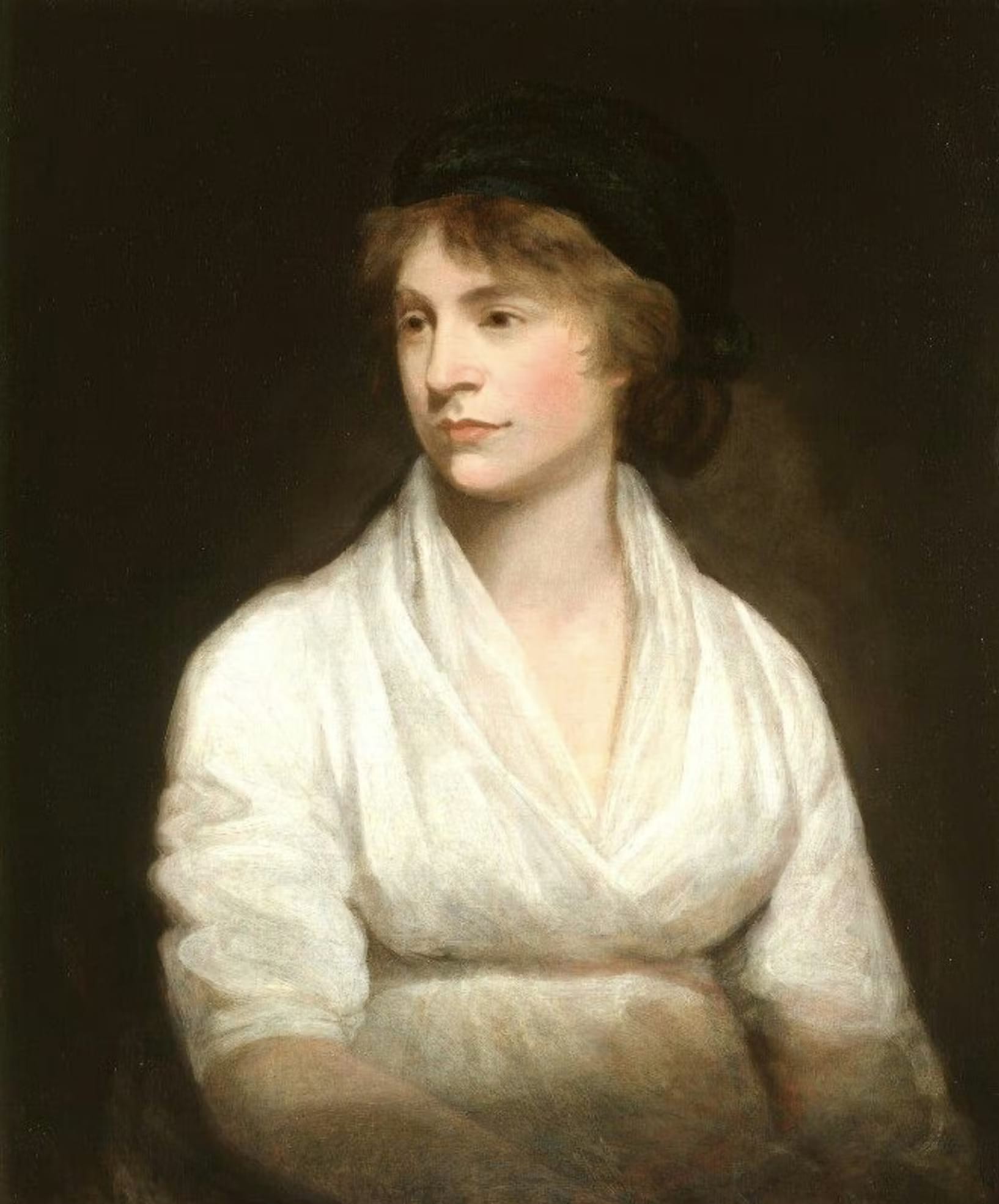
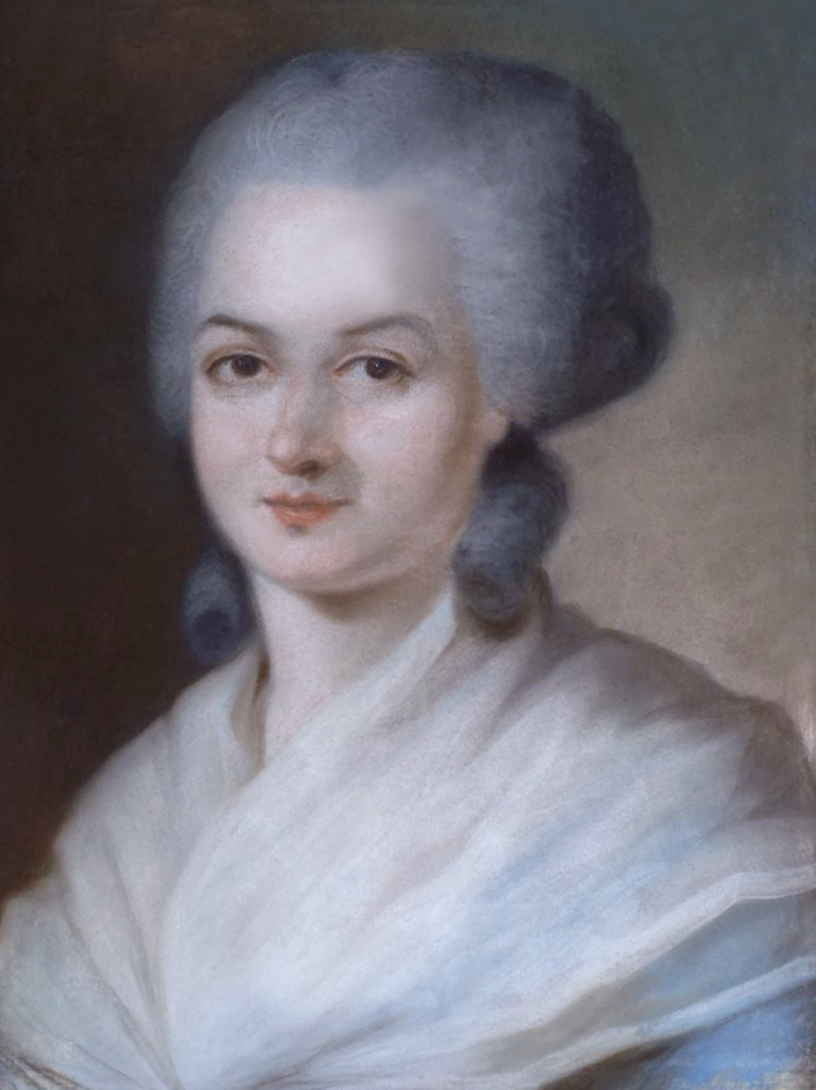
Judith Sargent Murray by John Singleton Copley (1770). Mary Wollstonecraft by John Opie (1797). Olympe de Gouges by Alexandre Kucharski.
🇺🇸 Judith Sargent Murray
Judith Sargent Murray (1751-1820) is Warren's less known Federalist counterpart, who wrote more than 100 essays, as well as plays and poems, in the same era. She too shared a tutor with her Harvard-bound brother and was unusually educated for the times. Her regular columns were collected in The Gleaner, an essential protofeminist text. She was also a founding member of the first Universalist church.
Murray's advocacy was more radical and explicit, at least for an American (see what I mean below). In 1790, she published her most influential essay, On the Equality of the Sexes, in which she argued that women were the spiritual and intellectual equals of men – a bold statement then. If women were less accomplished, she wrote, it was because they were deprived of education and of opportunities to exercise their imagination and creativity. Comparing boy and girl children, she wrote "one is taught to aspire, and the other is early confined and limitted" (yes, we're still having that conversation). She does not go so far as to contest the primary duties of women as wives and mothers, but advocates for education and intellectual pursuits that would make women better mothers and more virtuous citizens able to fully contribute to the nation. Her ideas were key to the development of "republican motherhood". (We'll talk about that next week.)
Murray is perhaps less known because her letters were long lost. There isn't yet a major biography of her. Someone get to it!
🇬🇧 Mary Wollstonecraft
Mary Wollstonecraft was the British author of A Vindication of the Rights of Woman (1792), which came after Murray's essay but was more widely read and influential. Like Murray, Wollstonecraft's argument was primarily for the education of women, rather than political rights. She argued that women ought to be more than "ornaments to society" and that to limit women was to deprive society of their full contribution.
Wollstonecraft was responding to Charles de Talleyrand's essay on the organisation of public schools in the new French republic, in which he had argued that the state only needed to be concerned with educating boys. She was also following on her own Vindication of the Rights of Man (1790) in which, as a true Enlightenment thinker, she argued for natural rights and the right to rise up against an unjust government. She had been excited by the ideas of the French revolution but was disillusioned by the Terror.
Wollstonecraft was long better remembered – only to better dismiss her ideas – for her private life. After her death, her husband published a loving but too honest memoir, which made revelations about her love affairs, illegitimate children and mental health. Wollstonecraft died in childbirth in 1798. The child was Mary Wollstonecraft Shelley, the author of Frankenstein.
🇫🇷 Olympe de Gouges
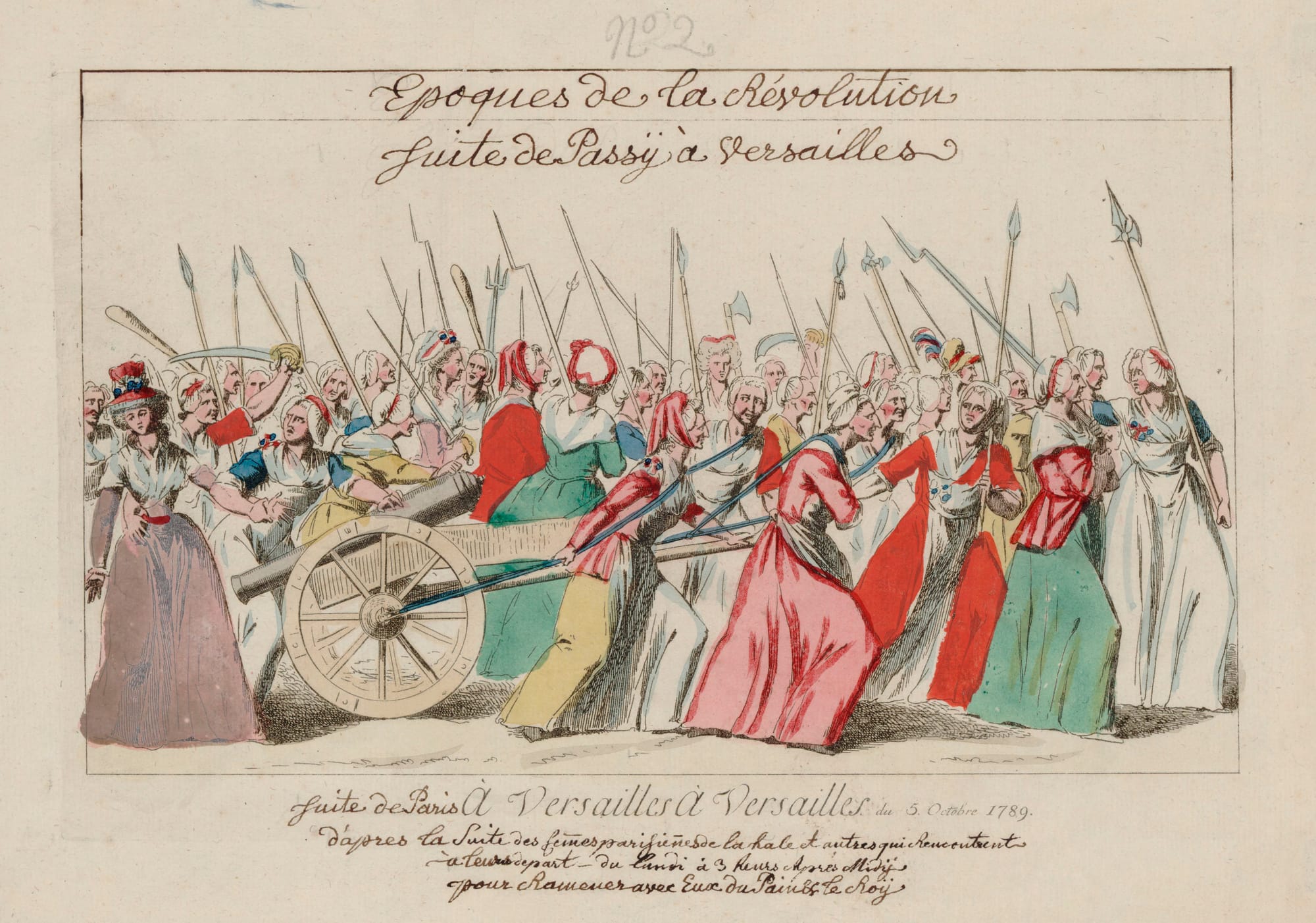
The sudden explosion of ideas about women's rights in the 1790s came out of the French Revolution, in which women had been more visible and more radical than in the American Revolution. On 5 October 1789, a crowd led by Parisian women who were rioting over the price of bread marched the 12 miles to Versailles and marched Louis XVI and his queen back to Paris to signify his submission to the people's will. (This would not end well for them.)
French female politician Olympe de Gouges (1748-1793) was, like Warren, Murray or Wollstonecraft, a playwright and essayist and the most radical of the bunch – though moderate by French revolution standards. She opposed the execution of the king and later spoke up against Robespierre and the Terror. It would cost her dearly. She advocated for the rights of women and the abolition of slavery, one of the first in France to publicly oppose the abhorrent trade. In 1791, she published a Declaration of the Rights of Woman and the Female Citizen, a response to the 1789 Declaration of the Rights of Man and the Citizen, the foundation of the new republic, which had entirely eschewed the question of women's rights. She had intended it as a bill of rights to be taken up by parliament, though the representatives never put it on the agenda. "Woman is born and remains free and equal in rights to man," she wrote. She argued the republic ought to return to women the natural rights – including political rights – that prejudice had stripped them of. She defended the right to divorce and advocated for religious marriage to be replaced by equal civil partnerships that also protected illegitimate children. She advocated for the creation of maternity wards and an early system of state welfare for the poor and the unemployed.
"A woman may step up to the execution block; she ought to be allowed to step up to the podium as well," she said. She was guillotined in 1793.
Read the books
All book sales support Broad History and independent bookstores.
A Woman's Dilemma: Mercy Otis Warren and the American Revolution
🇺🇸 in the US
🇬🇧 in the UK
Revolutionary Backlash: Women and Politics in the Early American Republic
🇺🇸 in the US
🇬🇧 in the UK