As promised, I want to flag a few of the aphoristic tales Carol Berkin shared with us in the first episode of the Women of the American Revolution series, explain why you may have heard a few different versions of them and give you the best available version we currently believe, which is the unsatisfying best I can do. But first, we have to talk about the intersection of folklore and history and why, in women's history in particular, we have to get comfortable with a certain level of uncertainty. (Or you can skip ahead to just the facts, but you'd miss out.)
Women weren't always disappeared from the story of the American Revolution. Immediately after it, pamphlets, poems and political speeches honoured the contributions they had made to independence, Carol Berkin tells us in the introduction to her book Revolutionary Mothers. Even a couple generations after the war, Americans could read Elizabeth Ellet's The Women of the American Revolution, a three-volume compendium of some 160 profiles of heroines of the early republic, published in 1848-1850. "It is almost impossible now to appreciate the vast influence of woman's patriotism upon the destinies of the infant republic", Ellet was already writing then. (And already, her book was more concerned with the patriotic birth myth of America than a strictly factual history.)
What Ellet was perhaps starting to recognise is a pattern longtime Broad History listeners will be familiar with – women who had in their day been celebrated and recognised on par with their male peers were fading away from memory. Female fame just doesn't have the same staying power.
The reason – or at least one reason – is well known to women's historians, and again Carol Berkin reminds us in her introduction. The professionalisation of history as an intellectual discipline over the course of the 19th century, as of so many other fields during the Industrial revolution, pushed women out. It replaced antiquarians – amateur upper-class nerds with time on their hands, mostly men but a not insignificant number of women – with university-trained historians. Universities, crucially, did not accept women. Just as "the professions" were expanding to serve an increasingly complex economy, women were shut out of them by the tyranny of a qualification bar no amount of effort would allow them to clear.
Male historians, concerned with their new discipline's legitimacy and understandably less preoccupied with female representation, focused on power. Who had it, who lost it, how it was exercised. Eras were named after kings' reigns, marked by conquests and the movement of borders, bookended by wars. In this “great men” version of history, few women featured. Their stories retreated into folk tales and family lore, preserved in bedtime stories and letters packed up in attics for nearly two centuries until, in the 1970s, the feminisation of higher education led to a great boom in women’s history scholarship. Suddenly professional historians cared about women because they were women. (It's not always the case and it shouldn't be, but you'll noticed from the Broad History guest list that women's historians are very often women historians.) It wasn't just women either; historians started paying attention to the working class, to immigrants, to the indigenous and the colonised, to gender and sexual minorities...
When came time to resurface these stories, this new generation of historians faced a problem. In history, documents are king. People are biased. They misremember. They embellish. Familial tales get transformed with every retelling until, just one or two generations down the line, they bear little resemblance to anything that truly occurred. If we must rely on a oral history, we like it written down, thank you very much, as contemporaneously as possible. Nothing will excite a historian like a diary or a court transcript. And here lies the rub: The furthest you sit from power, the less written record there is of your existence.
How do you tell the stories of women who held no political office, who did not own anything in their own name, who could not write legal documents (remember coverture) and who hardly had a second in the day to start a diary? How do you find that story again after centuries when no one thought it particularly worth preserving? There is a record. It's just much harder to find and we've only been seriously at it for a few decades. It forces us to rethink what consideration we give to oral cultures, what gaps in the story we can live with and how we present those unknowns to the audience. That's what makes women's history so exciting – there's still plenty to find out – and so very incomplete and contentious too. Sometimes all we have is a folk tale and a historian somewhere hoping they'll get to it before retirement.
With that in mind, let's look at some of womanly legends of the American Revolution we mentioned in the first episode.
Molly Pitcher
Molly Pitcher isn't anyone's government name. She's often been named as Mary Ludwig Hays, the wife of soldier William Hays and a camp follower who washed clothes and provided assistance to the army at Valley Forge. She is said to have taken up her husband's place at the cannon after he collapsed at the battle of Monmouth. Another option is Margaret Cochran Corbin, who was exceptionally skilled at aiming and firing and also took up her husband's post when he was killed at Fort Washington, until she was very seriously injured herself. She was the first woman in US history to receive a pension as a disabled combat veteran.
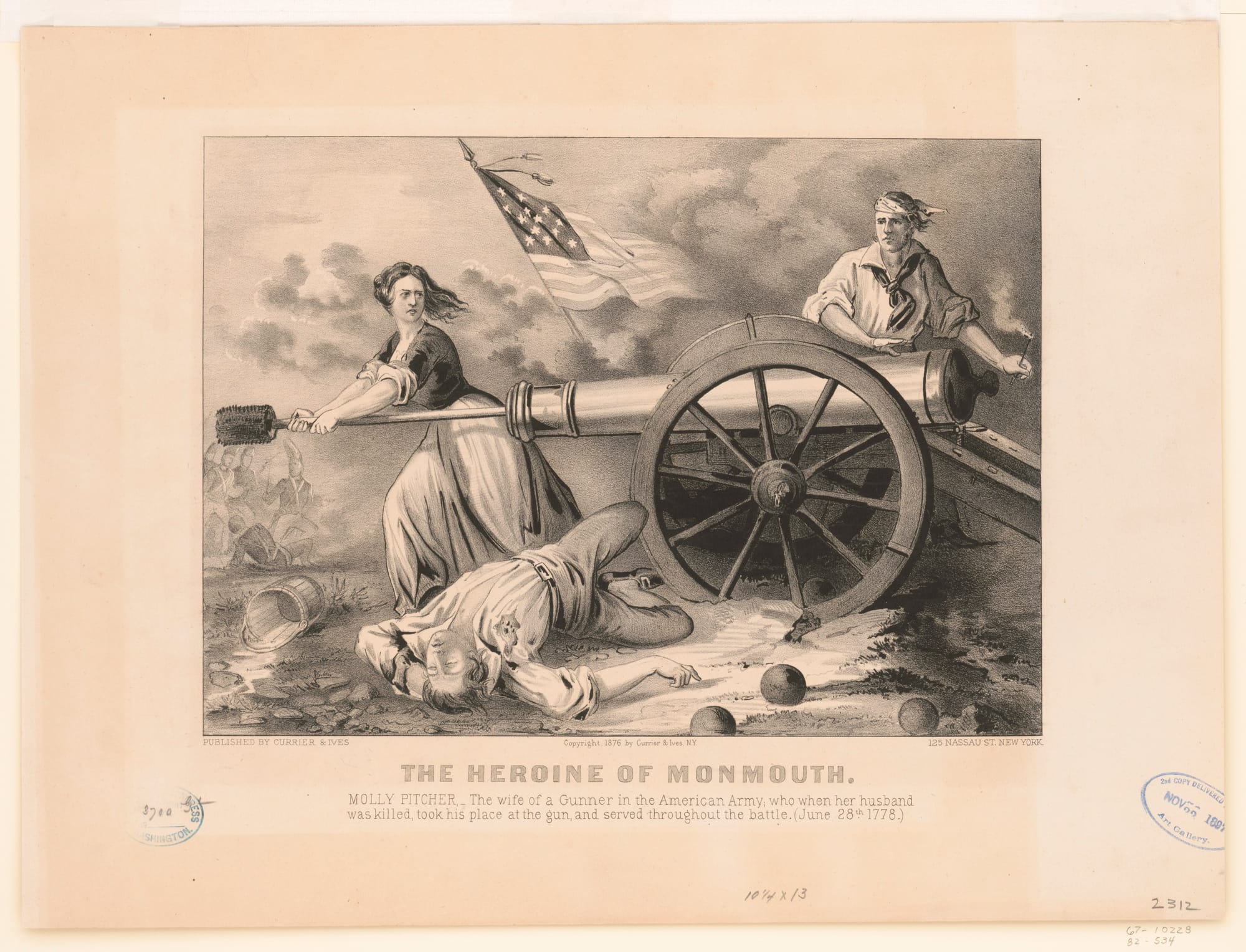
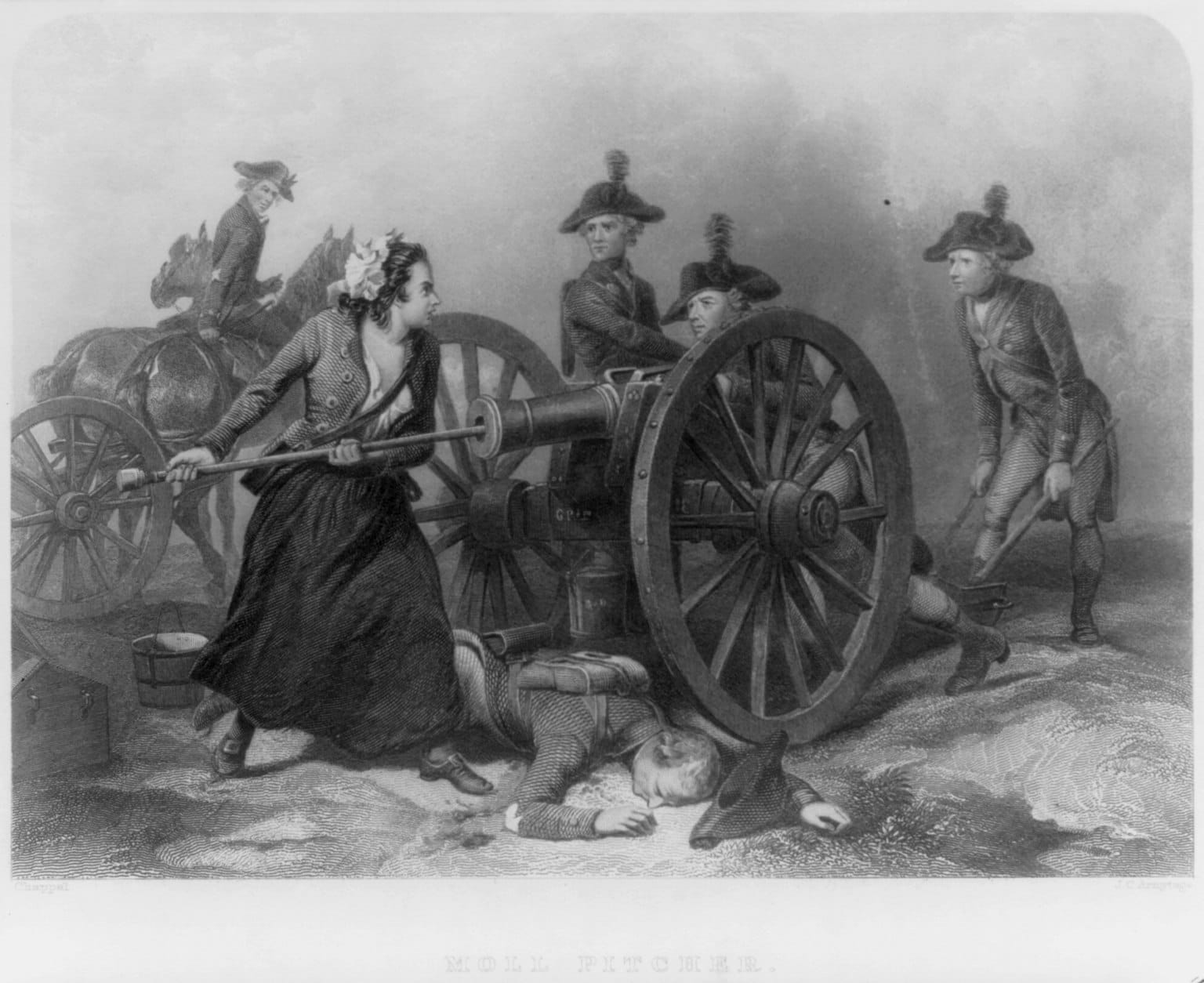
The Heroine on Monmouth (1876) and Molly Pitcher [i.e. Molly McCauley loading cannon at Battle of Monmouth, 1778] (1859). These two unsigned engravings identify Molly Pitcher as Mary Ludwig Hays, also known as Mary McCauley after her second husband. (Public domain, Library of Congress via Wikimedia Commons)
But more than likely, "Molly! Pitcher!" isn't a nickname for any one person, but an archetype, an amalgam of many women who did exist. A revolutionary "Rosie the Riveter", as Carol Berkin puts it. Soldiers called out to women on the battlefield to bring them water, not for hydration (they were more likely to drink alcohol) but because water was needed to clean the barrel and cool the cannon between firings.
Lydia Darragh
Lydia Darragh is often portrayed as a daring patriotic Mata Hari, but she was really an opportunistic spy and her career in espionage only lasted a few months. When British troops occupied Philadelphia, the Darraghs' front room was requisitioned for officers' meetings. One night, she eavesdropped and learned of General William Howe's plan to attack Washington's army. Lydia was an Irish Quaker nurse and midwife, torn between the pacifism of her faith and her patriotic leanings, as well as fear for her son, who had enlisted in the Continental army. (The Society of Friends later disciplined both mother and son for getting involved.) She asked for a pass out of the city to buy flour from a mill a few miles away, such a banal request that the Red Coats were none the wiser. That's how she met Washington's scouts and gave them warning of the Battle of White Marsh.
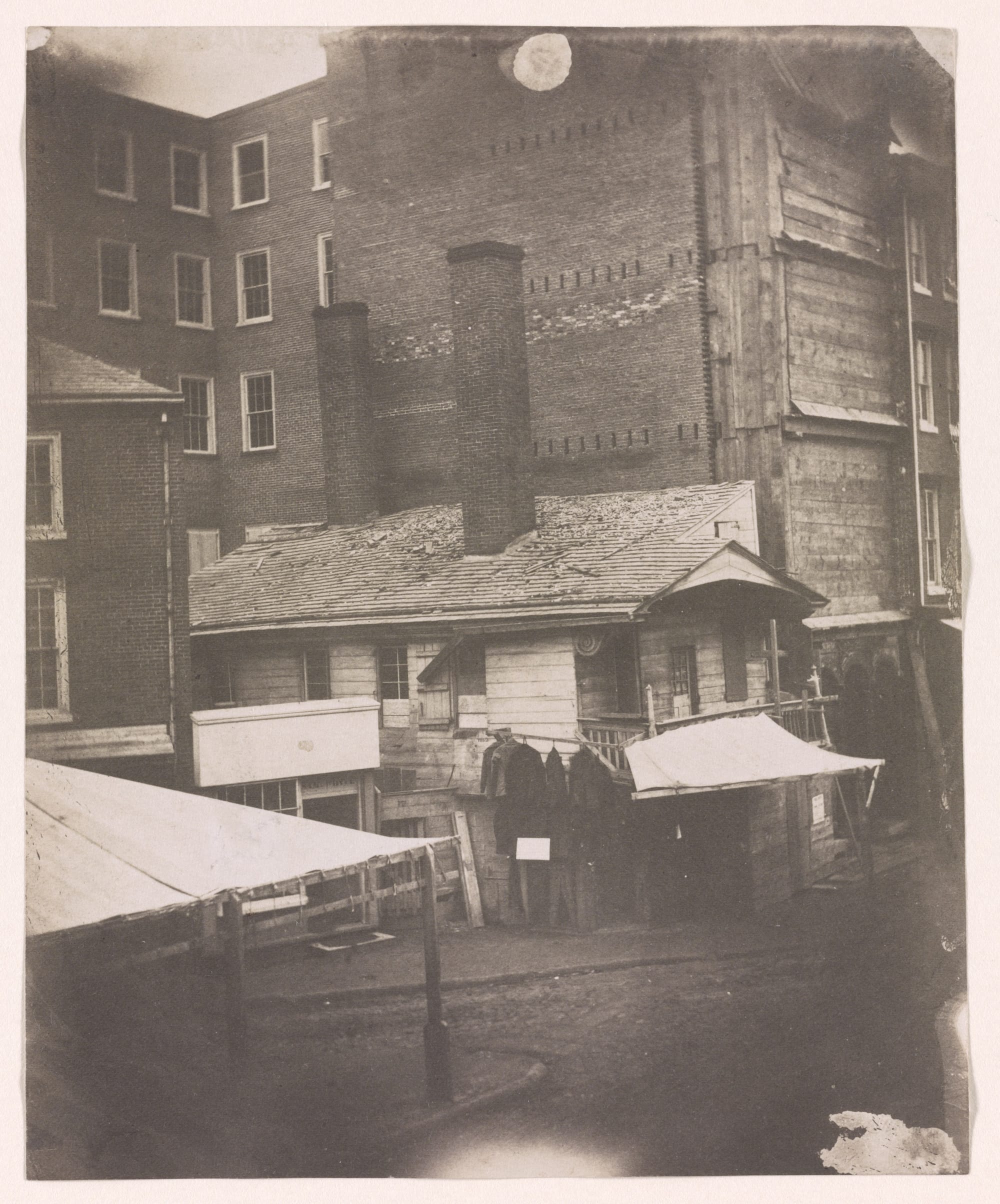
Lydia Darragh's story has passed into revolutionary legend after she shared it with friends and family. She left no written record and the tale was first printed decades after her death. Flowery details, such as her sewing notes into the lining of her skirt, her son's jacket or a corpse's pocket (the family were, in some tellings, also undertakers), are uncertain. Philadelphia historian Robert Fanelli tried to parse fact from fiction in a biography of Lydia Darragh. Worth listening to his interview here.
Deborah Sampson
Deborah Sampson participated in her own myth-making. For years after independence, she toured as a sort of revolutionary Buffalo Bill, recounting her adventures as a gender-bending patriot who disguised as a man – enlisted soldier Robert Shirtliff – to fight in the Continental army. She was a tall and muscular person who passed as a man in an elite unit for nearly a year until, ill and unconscious, she was undressed by a doctor. With her friend Paul Revere's support, Sampson petitioned for and eventually obtained a veteran's pension.
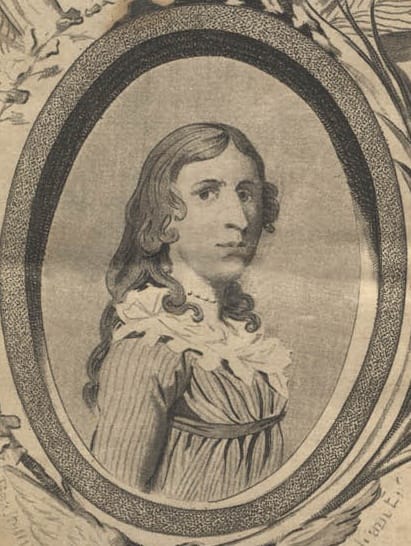
We have records of several women who dressed as men to be able to enlist, both out of patriotism and because the pay was more attractive than most options open to women then. It's impossible to know how many did this as only those who were caught left a trace. Only Sampson and Corbin are on the record as having received combat pensions in their own right, though we know dozens tried.
Sybil Ludington
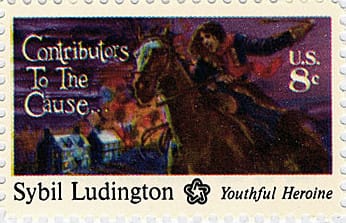
How Paul Revere became the iconic midnight rider really owes more to a particularly good poem than to Revere's unique skills. There had been many other riders. Whether Sybil Ludington was one has been matter of historical debate for decades.
Sybil was the 16-year-old daughter of American Colonel Henry Ludington when on the night of 26 April 1777, British troops started to march on Danbury, Connecticut. Sybil rode many miles through the night, the story goes, to warn militiamen up and down the Hudson Valley to resist. The problem is Sybil's story does not appear in print until more than a century later, recounted by a historian (note: a woman again) who swears that she has compiled many documents but does not cite precisely which (following the historiographical practice of the 19th century), and relies on accounts by the Ludington family, who have done a lot to memorialize their ancestor. We're here at the crux of the issue: Is it fair to discount a story without contemporary records at a time when no one cared to record women's lives? What credit should we give to oral histories? How much is the word of descendants' worth? Does women's history not deserve the same stringent evidentiary standard as others', or does refusing to adapt the practice perpetuate our erasure? I'll leave you to parse that one; I don't have an answer.